

Imagine coaching a national team where one cold shooting stretch in a 10-minute game sends you home. You fly 30 hours to Mongolia. Play 10 minutes. Lose. Fly home.
Now imagine running a 100-kid youth basketball league with zero parent complaints in two years. No drama. No sideline coaching chaos. Just pure basketball development.
Will Ferris has done both. As Team USA 3×3 coach and creator of a thriving youth 3×3 league on Bainbridge Island, Will has mastered how to run a youth basketball league with zero drama while building culture under pressure and creating systems that scale. Whether you’re coaching at the highest levels or just starting out, his approach applies.
In this episode of the CoachIQ Podcast, Will breaks down the counterintuitive culture techniques that transformed his teams and the exact systems he used to scale a youth basketball league to 100 kids without the chaos.
In this episode
- Team USA 3×3 coaching: Why ego has no place in 3×3 and how coaches can’t talk during games
- Culture strategies: Winners get to run, cookies after losses, learning from success over failure
- Youth basketball league model: The exact structure, marketing, and systems for running a 100-kid league with zero drama
- 3×3 basketball development: Why 3×3 creates better decision-makers than five-on-five
- League systems: How to market, register, communicate with, and manage 100 families using automation

Learning from success: the culture approach most coaches get backward
After Team USA lost to Germany in the World Cup quarterfinals, Will’s team sat in silence for 30 minutes. Not a word. When they won games, they spent five minutes celebrating before diving into mistakes. But after losing, they sat receptive, processing, learning.
Will realized his team was most open to growth after failure—and that’s a problem.
Most coaches build cultures that only learn from losing. Film sessions focus on mistakes. Practices emphasize fixing what’s broken. Players develop a threat-based mentality where they’re constantly defending against criticism.
Will flipped it. He started showing three minutes of great clips before any corrections. He asked players what they learned from success, not just failure. The guys on Team USA called him out: “Man, it’s weird that you show all these good clips all the time.” But it worked. Players stayed present, confident, and receptive—not tight and defensive.
This isn’t soft coaching. It’s strategic. When athletes are threatened—defensive, stressed, fearful—they can’t perform at their peak. The coaches who master this build cultures where athletes learn from winning and losing equally. Similar to coaches like Joey Hewitt emphasize with mental performance training—being present and eliminating the results paradox where obsessing over outcomes hurts performance.
Counterintuitive culture techniques from high school
Will’s high school culture strategies sound backward but work:
Winners get to run. Most coaches use running as punishment. Will made it a reward. Running became a standard for being the best team, not a consequence for being the worst.
Cookies after blowout losses. When Bainbridge got destroyed by their rival, Will brought cookies and they played dodgeball. The message: outcomes aren’t everything.
Peer-to-peer letters. Players wrote letters acknowledging what they valued in each other. Players shared vulnerabilities they’d never expressed, creating openness and trust.
Presence drills before practice. Every practice started with something joyful: dodgeball, tag, balloon drills. The goal was to bring players down from their stressful day before training began.
The through-line? Eliminating threats. When athletes feel threatened—by a harsh coach, playing time anxiety, or fear of mistakes—they tighten up. Will’s culture strategy helped players relax, trust, and stay present.
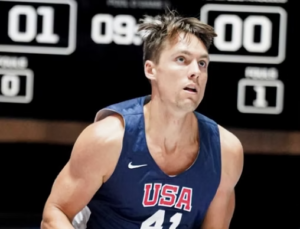
How to run a youth basketball league: the 100-kid model with zero drama
After seeing how 3×3 basketball develops better decision-makers, Will wanted to bring it to youth players. But he also wanted to solve the three biggest problems in youth sports: overactive parents coaching from sidelines, unequal playing time, and volunteer coaches without development systems.
So he built a youth 3×3 league with one rule for parents: if you start coaching from the sidelines, you’re out of the gym. In two years of running the league, he got one negative comment. Compare that to high school coaching, where he fielded hundreds.
Here’s the exact model for how to run a youth basketball league:
League structure and format
Four weekends in September, every Sunday. Each session runs two hours max, but every kid gets exhausted and touches the ball 10 times more than in traditional five-on-five games. The economics mirror why group training outperforms individual sessions—maximizing athlete touches per hour while creating competitive environments.
Four divisions: 4th-6th grade boys and girls, 7th-8th grade boys and girls. Four hoops running simultaneously. Each kid plays four 10-minute games per day with breaks between.
Team assignment and registration
Will divvies teams evenly based on height, experience, and skill level from signup forms. The key? Don’t let kids sign up with their teams. All the best players will team up and the league becomes lopsided. Will controls rosters, makes adjustments through week two, and got zero complaints about roster moves in two years.
He partnered with Bainbridge’s youth basketball program to access their email database and marketed through their website. For coaches building leagues from scratch, a professional coaching website becomes your registration hub. Once signups came in, Will used client management systems to organize athlete information, track attendance, and manage parent communication.
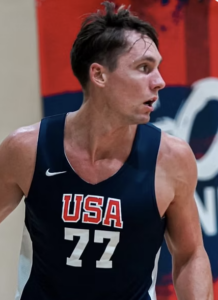
USA Basketball partnership for credibility
Will registered the league officially with FIBA. Every kid gets a USA Basketball profile and earns national ranking points. One kid is ranked 1,800th in the U18 USA rankings. They think it’s the coolest thing ever. This partnership costs nothing but adds massive credibility. For coaches running ongoing programs, a branded mobile app creates similar engagement—giving athletes a central hub to track progress and stay connected.
Communication that eliminates drama
Will’s philosophy: the more clear and detailed your communication, the fewer conflicts you’ll face. He sent detailed emails covering scheduling, team assignments with rationale, rules including the parent sideline policy, what to expect each day, and USA Basketball registration.
With 100 kids and 200+ parents, manual communication is impossible. Automated communication tools let you send broadcast updates, answer questions in one place, and keep everyone informed without spending hours in email threads. This approach works whether you’re running in-person leagues or expanding with virtual coaching programs—the principle remains: overcommunicate to eliminate confusion.
Revenue model and systems
Unlike opening a full training facility with $50K startup costs, running a league model keeps overhead minimal. Will ran 100 kids through four weekends with minimal overhead beyond gym rental and automated payment collection. The financial model is highly profitable while keeping costs accessible.
Parents love it because their kid gets maximum touches, exhausting competition, and development in a short two-hour window close to home. No $500 travel tournaments. No three games where their kid shoots twice.
For coaches looking to build similar leagues, solve real problems—playing time, development, convenience—and parents will pay for it. The same principle applies whether you’re opening your own basketball training facility or running leagues. Structure it well, automate the logistics, and you eliminate the drama that kills most youth sports programs.
Systems and automation: what you need to run a youth basketball league
Whether it’s Team USA 3×3, high school basketball, or a 100-kid youth league, Will’s success comes down to systems. For the youth league, sports league management software handled registration, communication, and logistics.
Will’s advice for coaches wanting to scale? Overcommunicate. Create systems that remove your need to be involved in every decision. If you’re constantly firefighting because you don’t have automated scheduling or client management systems, you can’t bring your best presence. You’re stressed, scattered, reacting.
But when systems handle logistics, you’re free to coach. Free to build culture. Free to make an impact.

The constraints-led approach in 3×3 basketball
One reason 3×3 develops better players than five-on-five? Constraints. In five-on-five, coaches control everything—timeouts, substitutions, play calls. But in 3×3, coaches can’t talk during games. Players have to read defenses, make adjustments, and solve problems on the fly.
This aligns perfectly with the constraints-led approach that coaches like Jeff Schmidt have implemented in their training businesses. The CLA approach designs environments where athletes discover solutions rather than being told what to do.
For Will’s Team USA practices, every drill was decision-based with high conditioning demands. He didn’t script plays. He created scenarios where players had to problem-solve under pressure—just like the actual game.
Systems that scale: lessons for any coaching business
Will’s youth league model made strong revenue with minimal headaches. In two years, one negative comment. One. Similar to how Coleman Ayers scaled By Any Means Basketball to seven locations, Will built systems that allowed the business to run without constant intervention.
The keys: Clear communication from the start. No parent coaching or sideline drama. Value-first pricing for maximum touches and development. Client management systems to track registrations, emails, and scheduling.
Whether you’re managing multiple coaching roles simultaneously like Mike Shaughnessy or building business systems that let you scale like Russell Reeder, the principle is the same: automate what you can so you focus on the experience you’re creating.
Final thoughts: be the presence, build the culture
Will’s journey from high school coach to Team USA 3×3 coach to youth league director isn’t about titles. It’s about intentional culture-building and systems that create space for athletes to grow.
Whether you’re coaching a national team or figuring out how to run a youth basketball league in your community, the principles are the same: Eliminate threats so athletes can perform without fear. Learn from success as much as failure. Design environments where players discover solutions. Build systems that remove micromanaging. And above all, be the presence your athletes need—confident, calm, fully there.
As Will says, when you give your whole heart to one path, opportunities appear. Systems, culture, and mental performance aren’t just coaching tools. They’re how you build a sustainable, impactful career in sports.
Managing 100 kids in a youth basketball league without the chaos? Youth sports coaching software handles registration, communication, and scheduling so you can focus on culture and development—not logistics. CoachIQ’s automated scheduling, client management, and communication tools help coaches manage large-scale programs without administrative overwhelm. See how CoachIQ works.
Connect with Will Ferris: Visit willwellnesscoaching.com for mental performance coaching, 3×3 basketball consulting, or to learn more about his culture-building approach.
Full Episode Transcript
The following is a lightly edited transcript of the episode above.
▶ Click to expand full transcript
Mitchell: Welcome back to the Coach IQ podcast. I’m your host Mitchell Kersh and I am extremely excited to introduce Will Ferris to the podcast. Will is a national 3×3 coach working with team USA 3×3 doing incredible things. Will, thank you for being here.
Will: Thanks for having me, man. Great intro. Excited to be here. we go way back now for the last two, three years. I’ve learned a ton from you. I’m grateful to share on your platform.
Mitchell: Absolutely. I’ll give a little bit of context. We got connected. I was living in Norway. You were Banebridge Island, Washington. And it was a a late night Zoom call for me. and we started talking about the constraintsled approach, a little bit of threeon-ree basketball. We had a mutual friend connect us and pretty soon after that established a camp out in Banebridge and it’s been a constant conversation since then, friendship. and I’ve equally gained a ton of inspiration from what you’re doing. And I would love to start right off the bat with Team USA 3×3. been doing great work with them. Can you talk about how that opportunity came about as somebody who was playing some some USA 3×3 and then made that flip over to coaching with that organization?
Will: Yeah, it’s a great question. if I was sitting here telling you that I was co going to be coaching a national 3×3 team, like even like eight months ago, I would have said, “You’re crazy.” Because I had no intentions of doing it. I was coaching a high school team at the time in a in a funny way how life works. I think like when you give so much of your heart to one path, even if it’s not financially lucrative, even if it’s not the most glamorous job, that’s what I did with the high school team is I just devoted my whole heart to it and I grew as a human, as a coach. And I don’t think it’s by accident that this opportunity came up. I think I was prepared for it. I think, whatever’s greater than us knew I was prepared for it. even though the players I work with are older than me and have more experience maybe in the game than me but it’s in a roundabout way we were in our state our first game of state we ended up losing the game and the day after my buddy had hit me up he’s like hey do you want to come to LA and just be a part of the training camp for the USA team so I was like screw it I’m not doing anything I flew out there and I was playing with them and I was just like on the court trying to help them gear up and one of the assistant or one of the the head coach at the time saw me drawing up plays and he’s like, “Do you want to help out and be a a coach, my assistant coach?” I was like, “Sure.” And long story short, he ended up stepping down and Jimmer and Jay, the guys running 3×3 were like, “Will you you might have to be the head coach for the for the World Cup.” And so I ended up traveling to Mongolia this summer, was able to lead all the practices, all the training camp, all the film, all the scouting, and it’s led to me being the American Cup coach this this fall. And I’ve just been in constant communication with all the pro guys that we have, sending them film and making sure that they got what they need to perform on the tour. Now, coaching for 3×3 is a different experience from five on five, correct? If you could speak to that on what does it look like? Five on five, you’re on the sideline, obviously. 3×3, a lot of it is once it’s go time, the players are responsible for a lot of the the adjustments, what does your role look like as a coach comparing five on five to three on three? Yeah, if you want to have an ego and coach, 3×3 is not the avenue you’d want to go. like I look at my high school experience coaching five on five and I see a lot of college coaches and you see like Bobby or is it Dan Hurley, they have these egos because they do have a lot of control over what happens in the games and they can manipulate a lot of things on the court to put their players in good positions and they can feel responsible for that. Whereas coaching 3×3 is very tied to the constraint led approach that you teach is is like there’s a lot of solutions that need to be made on the court. And if you’re over coaching, overanalyzing and giving too many rules, realistically none of that’s going to happen in the game. And you so you really have to prioritize decision- making and conditioning and making good reads, in the flow of the game rather than forcing all these things that in a five on five game you can control. So when I got the position, I, I picked your brain a little bit, but I also was just like taking what I learned from you and what I liked from my five on five experience and I said, “Well, in the game, I want to be able to watch these guys and not say a word. I don’t want to be in the crowd yelling anything. You’re not you’re not sitting on the bench with the team. You’re in the stands and you’re you you get a technical foul if they look at you.” So I was just like, “Wow, what a beautiful thing.” like you it’s like you this is what sports should be. You you’re a coach that you teach them and then you just trust them to perform. And so all the drills that I had designed were decision-m based but they had a ton of high intensity and conditioning elements and then we prioritized whatever our values were on offense and defense and man we did we did a heck of a job. I’m surprised we didn’t meddle at the World Cup, but we were 4-0 in pool play, playing the best basketball. all the guys were man, we’re in the best space as a team and ran into Germany. They have some studs and we just were cold for, a 10-minute game. And that’s just like how it is. That’s 3×3. you can have the greatest four-game run and lose the first game and you’re out. I think for me, I just like I keep racking my brain about why did we lose and how do you put your team in position to succeed in such a volatile game? Whereas in five on five, you have timeouts and you have halftime and you have different quarters and momentum and things that stop the game. 3×3, you really don’t. you just have to roll with the punches and you got to you got to be able to create adaptable players that can problem solve at all times. And as a coach that’s that’s humbling because like you you you start to view the game differently. You start to be like okay if I’m not out there and I can’t manipulate this what do how do I need to manipulate the environment in practice in a way to design that skill. And so I think that’s something that a lot of your viewers probably resonate to is that is what the CLA approach is. And trying to bring that to the guys they loved it. They were man, are some of the drills they loved, some of them they I I was gonna share this like creating a culture and environment like I almost wanted to create certain drills that they viewed as the enemy so that the drill the other drills they viewed as like they’re like, “Okay, great. We’re going to even though those other ones were hard, I made these like extremely hard ones that everyone rallied against and we’re like, “Yeah, this sucks.” And everyone’s in it together. but the CLA approach, I think throughout really helped the group play efficiently and and play well. I I think that was a lot of info, but that was my experience this summer, and I’m going to take that into the fall as well.
Mitchell: Yeah, it’s an incredibly cutthroat game. And I think even if you play it for fun with the the rules that these players are competing under, you feel how much more life and death it feels, the experience of it is as opposed to playing five on five. Like it’s a it’s a different energy system where five on five, some of the best players, they’re running two to four miles throughout a course of 40 minutes, 3×3 there was 10 minutes on the clock.
Will: It’s it’s 10 minutes and for most tournaments if you lose two games you’re gone. So like we’ll fly out to China and you lose a two 10-minute games and you’re done. You fly home. So like put that in perspective. Like when you say cutthroat it’s like you might fly 18 hours 30 something hours round trip and play 20 minutes of basketball. So if you want to gear up then do this. It’s like you got to be a little crazy and that’s why I have so much respect for these guys especially from America that are willing to do this. It’s you got to be a little you gota you gota have a little screw loose and a commitment to the game. But man, there is also that double-edged sword where when you win and when you have a good experience, it’s maybe greater than five on five because everyone’s a part of it,
Will: How hard it is to achieve that goal. how volatile it is. So you cherish those moments a lot more. So yeah, it’s cutthroat, man. It’s a crazy sport.
Mitchell: Yeah, the psychology piece to that sticks out to me where everything is is heightened and you have so much less time. That time that you’re having to perform, you’re way more exhausted. The game itself is incredibly physical. We’ve I’ve played against Will and I I feel like I’m getting fouled every single second and he’s like this is just this is the game. And I think that’s that’s one thing that I’ve learned a lot from you is is how important building identity is and building tools for the psychological game is. I know when you’re working with these teams and these players, you touched on it, you’re you’re designing environments in practice to make them sharper on the court, but also mentally, but can you be more specific on how are you preparing the mental side of it for these these individuals to go out there and be a collective unit where they’re fighting essentially what feels like for their lives for 10 minutes and even if things go well, they could still lose. How do you prepare a person for that mentally? I don’t think you can fully. I think what we really worked on as a team, especially in the World Cup, was not giving energy to things that we didn’t have to. so I would show a lot of film of just our body language on the court and where I would see people giving energy to the refs or at each other and then really positive things of hey, this I can see you guys like calming down, taking a deep breath, coming back together. I I’ll be honest, like I think with being younger than a lot of those guys and my first experience and I’m coming in and I wasn’t really supposed to be the coach, like I I wasn’t as confident teaching some of those things. But I’ll tell you what, I did learn maybe the most important lesson I’ve ever learned in terms of culture and ways that you can identify what you value in your culture was I’ll never forget this. It’s like seeped into my mind when we, we had our wins. We were 4 and0. we would sit there and we would harp on little things we should have done better and we maybe embrace the win for like five minutes and then it was what did we do wrong? What we got to get better? When we lost to Germany in that quarterfinal, we sat in that tent. There’s a tent outside of the the arena. We sat in that tent dead silent for 30 minutes. Like not you could hear a pin drop. No one said a word and I was like wow it it something stuck out to me and I was like I believe that we’re here on earth again we’re going higher higher level out there thinking a little bit but we’re here on earth to grow and evolve and get better and I think the universe is always trying to guide us to get to that learning at some level. So whether it’s whatever message or whatever funnel or whatever way of communication that we’re going to listen to, I believe it’s guiding us through that. For for that team specifically, what I noticed was when we were going to be most receptive to learning was when we lost. And so we valued outcomes a lot to learn rather than the experience of winning and success and having joy out there and like enjoying the process. To me, we weren’t as present and listening to that space. So ultimately, if you want to build like a great culture, you got to learn maybe times 10 more from all the great experiences that we’re doing than the negative things. And the guys would always like get on me in in the film. Not on me, but like they would always be like, “Man, it’s weird that you show all these good clips all the time.”
Will: They’re like, “You you keep you show three minutes of good clips before any of the bad things. like why do you do that? Like nobody’s ever done that. And without knowing I was like I’d rather us learn and be more receptive to learning from great things and great moments way more than learning from failure and negativity and challenge. Now it’s not to say that isn’t a really valuable learning lesson, but in terms of culture and preparing, I think you’re not just preparing for the volatility of failure. You’re preparing for all the great things that can go well. And I think sometimes like when you’re in a team environment 3×3 you can bicker at each other and philosophies the more you spend in that the higher chance you’re going to only learn from the negative. And so the cultures that I’ve always tried to build were always surrounding joy and trust and responsibility and but that takes intentionality. Like how often are we sitting after a workout and intentionally focusing on what we learned of the great things we did that day? And for most people, they have one success, it goes in and out the ear, it’s gone. They don’t even spend 10 seconds listening to it. But I’m sure like if you have a bad game, you’re sitting there and you’re churning in your head and you’re only thinking about that. Again, I think that higher power is going to guide us to experiences that we’ll learn from. So when I think of culture for that group, I or just any group in general, it’s identifying with each person like what are you going to listen to? Because I think for a lot of people, you could look at me and go, “Well, I’m younger. I don’t have I didn’t have any coaching experience in 3×3 and I also these guys have played longer than me. They might be better basketball players.” so what are they going to listen to in me as the leader? in any environment, if it’s not the leader they’re going to listen to, you got to find what they’re going to learn from. And if one guy’s only going to learn from failure, then you got to either identify that for him and help him shift that or you, teach him the other tools to learn from positive things. So again, I don’t know but to me, I learned a valuable lesson that day, which was, your culture and the values and the mental psychological preparation is is really just how do you keep channeling it towards growth. It’s rather it’s not just the success of the game. And I think that’s where the pressure comes from in 3×3 and the volatility is when you have these high expectations and it’s all about outcomes and shots aren’t falling and now you’re down 10 to two. Like that’s when everything crumbles. But it’s like if we don’t ever have to get to that point and we can learn and stay in the space where every single moment we can be as present as possible and we’re going to learn and listen to every single element of this game, things are going to go well for you. And I think it’s why the teams like Uub and these like like their Serbian team that’s wins a lot of the events. I think they just they’ll lose a game by 15 point or not 15 but like eight points in the first round when it doesn’t matter like they won’t get sent home and you never see any like really big reactions. They just stay in the course. They’re just they’re and they they just want to pry on people that live and die by these outcomes. And if they can get you in that in that corner, then they know, okay, we’re probably going to win. We’re going to take the smart shot, the right shot. We’re going to be patient. Things are going to happen for us. does that does that make sense? Like,
Mitchell: Absolutely. I I think it’s a counterintuitive approach to developing culture and reinforcing the the psychology, the team psychology that you’re trying to instill. And and I think I’ve seen firsthand how you do it on a five on five basis as well.
Will: I’ve also recently I got the chance to go to a Celtics practice. So it was really cool to see a coach like Joe Missoula and this was a a summer practice. So not a normal practice but he was still in the building. It was more focused on player development. their head of player development was running most of the things, but Joe was there the entire time and I was I was keeping my eye on the things to him that were really important and it was it was a lot of these small small details. Now, I was watching from afar, so I was having to interpret a little bit, but certain things of like his assistant coach not being confident in a call that they would they were making playing pickup. And he’s like, “Hey, man, like if you’re going to make the call, like you got to make the call and show confidence,
Mitchell: Like as a ref.”
Will: As a ref. And like that was the one time he he spoke up. After Jaylen Brown turned it over twice in a row, he didn’t say anything. Like he wasn’t concerned with that. these two big men were were really battling and like got into a little bit of a tussle and he brought them over and encouraged them for their passion. And so it’s like it was so interesting what he was choosing to listen to which I think was the the phrase that you used.
Mitchell: I love that. And I think that’s why I think I think Joe Miso does a great job developing culture. And I also draw this connection because I saw a clip recently where the players were explaining that Joe Mazula incentivized winning by winners getting to run. And that was the first time I saw that was at at one of your practices or it was one of your philosophies where you win a drill, you get the opportunity to run. And this was a five on five team, your your high school at Bainbridge High School. What you did with that program was incredible. Can you talk on a few specific things like I winning? If you win, you get to run the journaling aspect. and maybe pick one other of of counterintuitive ways that you developed culture and were able to impact these these high school players.
Will: Hey, I just wanted to take a quick break. My name’s Russell. I’m one of the founders of Coach IQ. We put on this podcast here. Our goal is to interview top coaches and business owners in the youth sports space across the United States and give you guys insight on the ground floor. How are they running their business? What do they think about the current ecosystem? And what are their thoughts on where things are going? we’re super excited to bring this to you guys. If you don’t know about us, we are an all-in-one sports management platform. We run a lot of the businesses that we have on the podcast and we’re fortunate enough now to work with about a thousand sports coaches across the United States and it’s our goal to make your life as easy as possible in running the business itself. Website, scheduling, payment management, everything handled seamlessly on our platform. And really what separates us is we are built specifically for sports. We’re not powering nail salons. We’re not powering Pilates studios. Every second of the day we focus on you. if that’s something you need where you’re looking to get your time back or you’re looking to grow your business, Coach IQ is really the only platform thinking about you every single day interviewing and working with the top coaches in the industry specific to sports. if that’s something we can help you with, we would love to connect with you. You can visit our website, coachiq.com, schedule a free demo there. The demos are awesome. It’s really less about selling and much more about just walking through what we’ve learned and providing value on what other coaches are doing. And if it’s a match, it’s a match. absolute no-brainer. Go schedule a demo. worth the time. And thank you guys for tuning in. Thank you guys for watching. Thank you for customers who are working with us. It allows us to do all this make better product and the main goal help athletes all across the United States and the world get a phenomenal experience from you guys the coaches.
Mitchell: Yeah. First of all, it’s cool. I really love what you shared about the Missoula guy where he’s like, “What is he listening to?” I think that’s like a freaking amazing like I want to stamp that as like a coaching pillar for me, especially as I continue to coach is like, “What are you choosing to listen to?” because it’s so easy to harp on those negatives. a couple culture things that I would do in in line with that, we did mindfulness, meditation, we we tried to commit to like things that nobody wanted to do. We just made them standards instead of punishments. I never used running as a punishment. I just was like, “Hey, if we’re going to be the best team, we got to be in shape. We’re all going to commit to running, two suicides at the end of every practice.” So nobody’s like, “Oh, this guy’s, it’s just this is the standard.” So trying to make those things standards rather than punishments, I think was really big. I would have kids constantly receive like letters from each other. peer-to-peer awareness and acknowledgements of what they saw that they really valued in each other, and those letters would get pretty deep of I’ve had kids be like, “Man, I really didn’t think that this person would think this way about me
Will: Because I’m in his same position.” And some of the stuff he shared to me, I was like, “Wow, it it really freed me. It really released me to to just be present there.” Because I think when you’re building a culture, and I’m not perfect at it, but you want to eliminate people’s awareness of threats. And what by that is like when people are defensive or they feel threatened, they’re in a reactionary, tight, fearful state, it’s creating stress in their body. And there’s nobody that performs better when they’re in stress. There’s nobody that plays elite basketball when they’re in a fight orflight state. Now, you might want to access that for very short bursts, but as human beings, we’re really only designed to experience stress to that degree for like 30 minutes. Now, if you have kids walking into practice for two hours in a threat a threatened state, you’re probably not going to get the best out of your team. what I always prioritize was all right, if I can get kids to relax and to enjoy, we would we would do first thing we would do every practice, I would call it a presence drill. that could be dodgeball, that could be tag, that could be just some random balloon drill that I found online, like something that brought joy back to the kids. you mentioned journaling. I would oftentimes try to like get them to to journal as a way to release or just to like come down from their day, a stressful day. Most of them are probably on their phones scrolling like something to bring them back to the moment. But a lot of it is reframing threats. hey, if I challenge you today, like those kids need to know I’m challenging them to help them get better, not as a way to demean them, make them feel like they’re worse or not valued in the program. And, helping those reframes is the biggest thing is in my mental performance work, a lot of that is, kids will be like, “Oh, I missed that first shot. Now I feel tight and I’m scared.” Well, then the first thing I should do is teach you that one, you’re the one that’s reacting to these thoughts. And two, you can reframe it any way that you want. and and that takes a lot of vulnerability from the kids, but also for me because if kids are coming up to me now saying, “Hey, like we’re not doing what you said you were doing or I I am not filling in that space now. I have to adapt and adjust. I have to listen.” And so I think a lot of those culture things were something that I always like stood by, like a game that stands out is we lost to I guess our rival, but they were they won the state title this last year and we got destroyed and the kids probably thought, we’re going to be running or like doing something crazy. And I brought cookies to practice and we played dodgeball in the in the wrestling room and it was like the most fun day that we ever had. And I was like, “Guys, it’s not just about the outcomes. we’re moving on from this.” and the last one, I’ll do sneaky things like I’ll throw a minute on the clock. I’ll be like, “Get on the sideline. I’ll pretend like I’m pissed.” And then as they’re gearing up to to run, I just go, “All right, you got one minute to tell each other what you value about them.” And like that’d be oh, like little little things like that to try and keep them engaged and have fun and enjoy the process of growth. I think those were the the key things from my standpoint as a coach that I tried to to look into. I think there’s a level of novelty and you keep things so fresh which is appreciated by your teams and I’ve I’ve had the privilege of being there and experiencing your ability to do it in person which is I think a true gift you have. but I also hope that what you just dropped there with some some techniques or some strategies that other coaches and trainers can take and start to implement. and and talking with your players, it was so evident to me that they had so much fun playing basketball, but their appreciation for you wasn’t really about basketball. It was about transforming them as as men, as young men, developing, which I thought was the coolest thing because I I work with hundreds of high school boys and 90% of them have a bad relationship with their high school coach. It there’s there’s some tension there. There’s a there’s a threat. And to see across the board your players have so many so many profound positive things to say about you speaks to the volumes of of what you’re doing from a culture perspective. Like this isn’t just you’re not playing games just to play games. Like it has a deeper purpose. it connects with these guys and their ability to relate with one another is another another aspect to it where I think you’ve created a really tight unit of players that are off doing incredible things now and I think there are so many ties between what you’re doing with threeon three and the five on five the culture your experience on the court that’s important so I want to switch gears and now talk about what you’re building at a youth level with the three on three league. can you talk about the league? It’s on Bainbridge Island. Talk about the magnitude, how you set it up, the type of kids that are there, the environment in the gym. I think this is one of the most beautiful models in basketball and and get businessy here as well because there are so many trainers and coaches out there that want to make a positive impact on the sport and want to do it in a way that’s financially responsible. And I think you’ve really cracked the code here.
Mitchell: Yeah. And and this is going to tie in, it might not seem like it, but to the culture piece and and the league that I’ve created on Banebridge. I think one thing also that’s important is not always the activities you do with the culture building, but also you recognize that you are the culture and you’re a part of the culture. And without your buy in to apply the values that you want to live by, it won’t sink into your culture. So like even the elevate camp we created on Banebridge, we were so bought into the values that we were trying to teach. And so that has to seep down to the kids. So a lot of my best moments, my best coaching moments were me recognizing, hey Will, what nobody cares. It’s who you are and what presence you bring to that gym.
Will: And that that stuck with me like when we beat the number one team in the state last year, I remember I sat in my car for 30 minutes before the game and I was like just be the leader and be the human and the confidence and the space of being without telling your kids that what saying that is who you are. They need to feel that is who you are. And I remember tapping into that and walking into that gym and knowing no matter if we win or lose, like I’m this is going to be the sickest, most amazing night of all time. tying that into the threeon-ree league, a lot of the feedback I got, I was at the end of it, I was well, anyone could have created this like d and people were no, like it’s because of you. like the environment that you created that you that you there’s so many people that help me but it’s who you are that you brought to this model why these kids are having so much fun why they’re coming into the gym excited because you’re the leader of it and you are excited about it you’re present with it your mind’s not in a thousand places you’re fully here you’re right here in this moment with these kids there’s nowhere else you’d rather be
Mitchell: So with Any model that I talk about, I’d really encourage first anybody that wants to try something or create a business or do something like you are the business first. You are your purpose first because if I need that from the person or the event or the thing, I’m probably going to be in a threatened state because now someone can take my purpose from me. And who who’s trying to take my model? And why is this kid not liking it? Why is he not enjoying it? Why did this parent give me feedback I didn’t like? Now I’m in this like heightened state where I’m not free. I’m not having fun. Okay, now I’ve lost the point. When I created this model, my idea was okay, where are the biggest withdrawals or or negative experiences in sport for most kids? Their parents are overactive. Their co they don’t get the playing time they want and their coaches are overcontrolling and demanding. And maybe they don’t even have the knowledge that they should be overcontrolling and demanding. They’re just volunteer coaches or dads. So when I created the threeon-ree league, I said, “Okay, I want to not only bring high school kids to be the refs, but I want these kids to have an environment for free and spontaneous play where winning isn’t everything, but it is a part of it. But parents are, the first year, I didn’t do it this year, but the first year I was parents, if you start coaching, you’re out of the gym. I’ll just kick I’ll kick you out.” And but but it was funny because if you create a good enough model, the parents don’t say anything in general. They just enjoy it. Everyone’s having fun. So the whole thing was I I would divvy and it got up to be a hundred 100 kids this year is I did four weekends in September, every Sunday in September. the commitment was hey the the days will be no longer than two hours, but your kid will be absolutely gassed. He’ll get a thousand more touches than a normal five on five game and he’s not going to be yelled at and screamed at. He’ll he’ll have a chance to learn and grow. And so the model was every weekend I had like fourth through six divisions for boys and girls and seventh through eighth boys and girls. And in the gym I had four hoops and they would play four games each day, four 10-minute games. And they would have breaks or gaps in between, but it would be an hour and a half, and they would get their games done. And the m I I had in two years of doing this, I had one negative comment. In in two years of coaching high school basketball, I’ve had hundreds of negative comments. And so what I was sharing with you before is I was like, “Wow, not only was it really financially lucrative, the kids had a blast, the parents had a blast, it was the feedback was amazing, the kids got a lot better. and it was the purity of basketball that I fell in love with. Like every every every time I think of basketball, I think of what an amazing game that teaches so many life skills and so many amazing physical skills. It’s so much fun and everything that gets in the way of that is all these politics and things and people fearing this and fearing that and it’s like I was like what I’m going to create something that’s completely opposite of that and let’s just create an environment where people want to be and so it was just cool like looking at it and then in in this winter I’m going to be running like a 8week jamboree format so that that was more of a league format where they we kept standings and kids would have their teams. in the winter, USA basketball is partnering with me and we’re doing about 60 kids and we’ll do an hour and a half each Monday where it’ll be half training teaching skills and then half just playing.
Will: Very cool.
Mitchell: And there’s a lot of models that I’ve like looked into and there’s another guy in California that wants to do like a really structured league where everyone has coaches and and blah blah blah and I’m like I wouldn’t do that. I just wouldn’t do that. I I would just stay away from parents like as much as you can. God bless the parents, but like sometimes they can’t help themselves and then it ruins the experience for the kid,
Mitchell: If I can take that away and I can give the best experience and it’s financially lucrative for me and it’s a great experience and it’s fun, like it’s a win-win win-winwin for everyone in the community and there’s no drama. How cool is that? It’s it’s the perfect formula. Can I ask a more technical question? Probably not the most fun question, but how did you market this? And how did you organize and collect signups, get emails, communicate everything? What was that like at 100 kids? That’s a lot of parents to be communicating with. How did you have those systems in place or how’d you build them
Will: Last last? both both the years I ran it through the root the youth program we had on the island. So the first year I stayed away from all of it. We just marketed it on the website and sent out a couple emails and it just blew up. Like a lot of people signed up for it. A lot of people wanted to be a part of it and I had coached a lot of those youth kids. So I knew a lot of the parents like there was a lot of that this year. A lot of those kids had aged out. Like I didn’t know any of these youth program kids. So again, we marketed it on the youth website, which I think for anyone wanting to do this, that’s the best way to go about it because you get a big database. It’s great for the the program that that wants to market a new event and they want to bring something cool in. and then I just as soon as the signups happened, and I and I really wanted to do it on my website, but I was what, like keep it going with the youth program. You can run your own thing later. And as soon as I got all the emails from who signed up, I just took that over. I started emailing people, just the scheduling, the teams, a lot of that, all those logistics. That’s where the majority of the time is. and then I started a an official league on the FIA website. if you look at the website, you can see all the kids’ names are signed up. They can create an official FIA profile and they can get USA national ranking points. it’s not a lot, but a couple of the kids are have 50 ranking points in 3×3. They’re they are contributing to the USA basketball Olympic, point system. And it’s like the coolest thing because kids can like see their profile and they they’re like ranked like one of the kids is like 1,800 in the U8 of USA and it’s like what?
Will: A lot of a lot of that was like really cool to add this year. but as far as emails, like yeah, you gotta you got to grind sometimes, like there’s going to be a lot of feedback and questions and things like that that I think if you want to run something successful, you got to be willing to do that. first of all, so I think anyone trying to do that, the overcommunication piece is is huge. That leads to less conflict and less confusion. yeah, I don’t know if that answers your question entirely, but just like being aware, coaching high school is the best because you you learn quickly how aggressive people get if they don’t understand the information. I think I’ve just gotten better at hey, once you have the contacts, overcommunicate, create a good relationship, create a lot of like trust. I think that’s the key thing.
Mitchell: Very cool. And do players or parents come to you with their teams set already or are you making all the teams?
Will: So that’s the the hardest part. So I try to in in the sign up process for this model, I think there’s models where you can have them sign up for their teams, but then you’re going to get a huge disparity of talent. So on Bainbridge, like there’s there’s not that many kids that you’re pulling from. So if I just let them sign up, all the best kids are going to sign up with each other. And then there’s going to be a lot of kids who don’t even have friends yet in the program. So they’re going to sign up by themselves. And so what I did is I took the kids’ height, their experience, skill level, and I tried to divvy all the teams evenly. And then I said, “Hey, at the like there will be no trade requests, but by week the end of week two, the teams will be solidified.” it gave me freedom to go if I mess up on a team, if some team’s really stacked, I can move kids around.
Mitchell: And what’s funny, man? I had in two years zero complaints about that. I thought I would get more where like maybe a kid’s on a 4 and 0 team and now he’s sent to the 0 and4 team. Not a single complaint on, I’m sure maybe they might think it, but not a single complaint on roster development. And I think the key, and this is like to this model, you want every team to have four kids, even though it’s probably better if there’s only three, because you have to be on the fly every weekend. There’s going to be multiple kids missing. you have to be able to adapt, move kids around, make sure kids have at least three players, and so it’s it’s a really dynamic thing. And that’s why I think really loosely creating the league and then building up towards that final weekend where it’s a tournament play,
Mitchell: As soon as it gets to tournament play, you want the teams to be solidified. Now, all those league standing games, like they matter, but they’re not as important as making sure the teams are correct for that final weekend.
Will: I don’t know. to me to me I think as a leader of that I feel like I wanted way more control than than not because it was like I knew there was going to be a lot of chaos. Now if you have coaches for the teams and I’m moving kids around now dude now now we’re in a I have to communicate to the coach and I got to let them know and now I’m pulling a kid from one team and I’m moving them over here. Now I have to like now I’m dealing with fires on multiple levels and egos parents. it was what? I’m going to just create a model where I have more of the control and it’s about the kids because like ultimately I’m doing it to shield the kids so that they have a good
Mitchell: It’s a you’ve built in adaptability based off the the way you structured everything. I think that’s really smart and and putting yourself in the shoes of a parent, especially if you were to look at something like a fall AAOU, you’re running this league in a time where where parents could alternatively go to a tournament, spend a ton of money, their player, their their child might shoot three shots, they might not even get in the game sometimes. There’s so many politics of the team there. Maybe they’re paying they might play four games in a weekend where by that last game it’s not even high quality. The last few games it’s not high quality. Whereas this like you go you watch your your child touch the ball so many times you’re in and out within two hours. You probably drove 20 minutes to the gym. You have your entire weekend and your kid’s fired up about everything. He’s he’s nationally ranked in the country. There’s there’s so many positives to the model and I think from a development standpoint as well, the kids are getting so much better so much faster. it makes sense on on so many levels. and I think I think you’re crushing it, Will.
Will: Thanks.
Mitchell: I appreciate you taking this time. I want to wrap up by giving you a chance to to say what what the best way to contact you is if if people have questions and want to get in contact with you. How would they do that?
Will: Yeah, first of all, thanks thanks for having me on. it’s just a amazing opportunity to share and and grow, continue to grow and communicate with you. I just think like it’s a it’s really cool what you’re building and creating for people. because I I know how much you changed my whole coaching philosophy in life. And little do like that stuff like gets seeped through and other people see it and then they start changing. It’s like I think that’s the coolest thing about life is that you you give a bit of knowledge to somebody and then you impact 20 other people without even knowing it. So I just want to say thank you man for inspiring a lot of this. I don’t think any of the stuff would have been possible with the USA team as effective as it was without you. So,
Mitchell: Just want to say thank you on that front.
Will: And then yeah, if you guys want to contact me, my website is willwellnesscoaching.com and you can like there’s a contact button there and if you guys want to get in touch whether it’s about mental performance, that’s my full-time job right now or get into the weeds on 3×3 or basketball, whatever it is. I’m always available to to chat and see how I can help.
Mitchell: Amazing. Well, thank you so much. Hopefully we can run this back again soon.
Will: Yes, sir.
